What Are OKRs? The Ultimate OKR Guide to Unlocking Business Growth

What Are OKRs? The Ultimate OKR Guide to Unlocking Business Growth
Why OKRs Are the Secret to Explosive Business Growth
If your team is working hard but struggling to hit strategic milestones, you are not alone. Many organizations suffer from a disconnect between high-level company vision and day-to-day execution.
Enter the solution used by some of the world’s most successful companies: OKRs.
We specialize in helping businesses bridge the gap between strategy and success. Our OKR guide focuses on what OKRs are, why they are essential, and how you can start implementing them effectively with our support.
OKR Guide – What are OKRs?
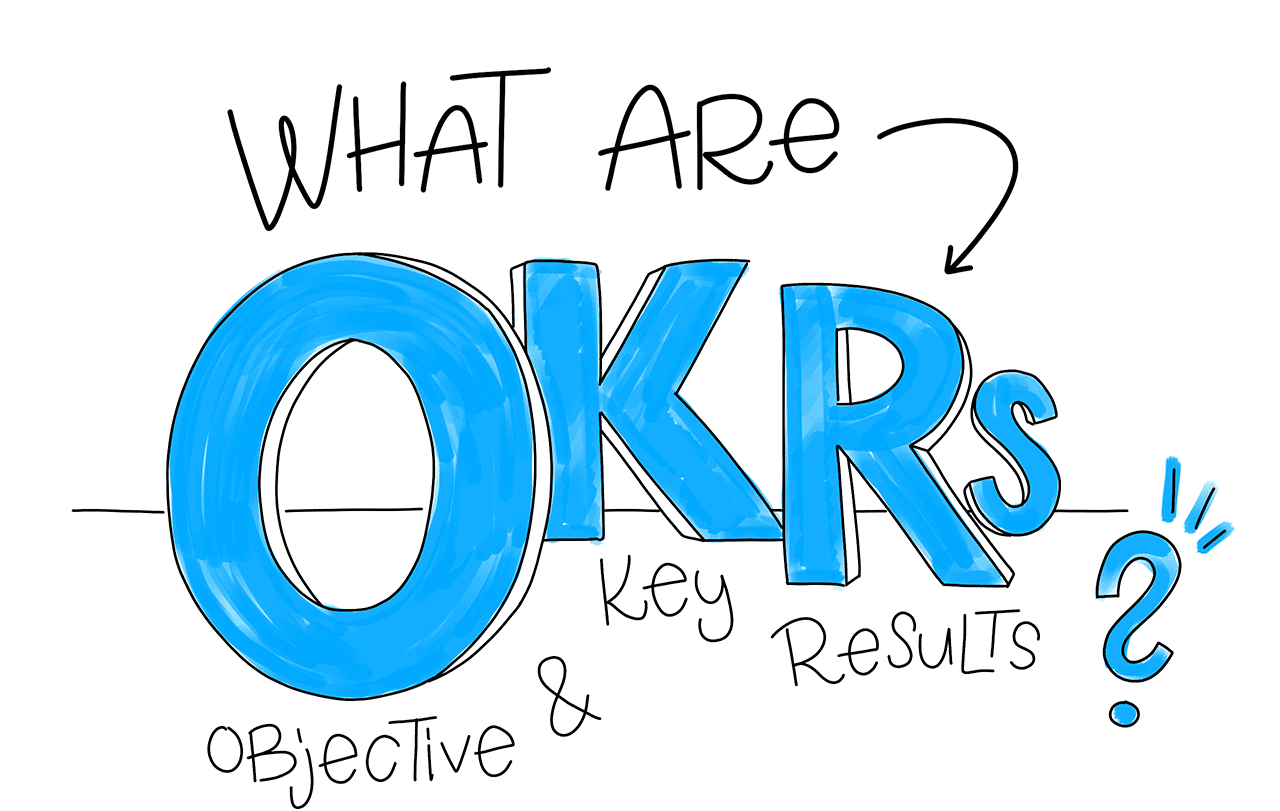
OKRs, which stands for Objectives and Key Results, is a powerful goal management system. It provides a structured framework for setting measurable goals and diligently tracking progress
Think of it as a GPS for your business. The Objective is your destination (where you want to go), and the Key Results are the milestones along the route that prove you are heading in the right direction.
The Core Benefits of Using an OKR System
Implementing OKRs is not just about adding another administrative task; it’s about fundamentally changing how your organization operates. When utilized correctly, an OKR system can help to:
- Clarify and Simplify: It cuts through the noise and clarifies the goal-setting process, ensuring everyone knows exactly what matters most.
- Track Progress: It provides clear metrics to track progress and quickly identify areas requiring improvement. Our OKR guide help
- Drive Engagement: It encourages and motivates employees to achieve tangible results by showing them how their work impacts the bigger picture.
- Boost Collaboration: It facilitates significantly better communication between managers, employees, and cross-functional teams.
Crucial Rules for Setting Winning OKRs
Knowing what OKRs are is only half the battle; writing good ones is where the magic happens. When setting your OKRs, keep the following in mind as you use our OKR guide.
- Make Objectives SMART-er: Objectives should be specific, measurable, achievable, relevant, and time-bound. They need to inspire action.
- Keep Key Results Quantifiable: If it doesn’t have a number attached to it, it isn’t a Key Result. You must be able to measure success objectively.
- Ensure Strategic Alignment: Your Objectives and Key Results should always be directly aligned with the overarching company strategy.
- Embrace Agility: OKRs are not “set it and forget it.” Objectives should be reviewed, graded, and updated on a regular basis (typically quarterly).
How to write good OKRs?
One of the most common pitfalls when companies first adopt OKRs is accidentally writing a fancy to-do list instead of a true goal management framework. This happens when teams focus on Outputs rather than Outcomes.
Understanding the difference between the two is the key to unlocking the true power of your OKRs and driving genuine business growth.
Here is a simple breakdown:
- Outputs are the things you do. They are the tasks, projects, deliverables, and activities you complete. (e.g., publishing a blog post, launching a feature, hosting an event).
- Outcomes are the results of what you do. They measure the impact, the change in customer behavior, or the business value created by your outputs. (e.g., increasing website traffic, boosting retention rates, generating revenue).
While outputs are necessary, Outcome OKRs are what actually move the needle for your business. Let’s look at a clear comparison.
Scenario: Improving Customer Support
Imagine your customer support team is trying to improve the experience for your users. Here is how an Output OKR compares to an Outcome OKR.
The “Output” OKR (What to Avoid)
This OKR focuses merely on completing tasks. It measures effort, but it doesn’t guarantee that the effort actually solved the customer’s problem.
- Objective: Revamp the customer support process.
- Key Result 1: Rewrite 50 help center articles.
- Key Result 2: Train all 10 agents on the new software.
- Key Result 3: Implement a new chatbot on the homepage.
Why this falls short: You could achieve 100% of these Key Results, but customer satisfaction might still be terrible. You have completed tasks (outputs), but you have not proven any positive impact. Any OKR guide will tell you that OKRs are about results not task.
The “Outcome” OKR (What to Strive For)
This OKR focuses on the measurable impact you want to achieve. The team still has to do the tasks (like writing articles or training agents), but success is judged by the results of those tasks.
- Objective: Deliver a frictionless, world-class customer support experience.
- Key Result 1: Increase Customer Satisfaction (CSAT) score from 82% to 90%.
- Key Result 2: Reduce average first-response time from 4 hours to under 30 minutes.
- Key Result 3: Decrease the volume of repetitive support tickets by 20% (indicating the help center is actually working).
Why this wins: This OKR focuses entirely on business value and customer impact. It gives the team the freedom to experiment with different outputs (new articles, chatbots, different software) until they find the right combination that actually achieves the desired outcome.Gemini 3.1 Pro
Ready to Master OKRs?
Understanding the basics with our OKR guide is a great start, but successfully rolling out OKRs across a team or an entire enterprise requires expertise. For OKR Coaching, Training, Workshops and Consulting please visit our page OKRAsia.com or email us on transform@asiapmo.com to have direct learning beyond the OKR guide.
If you are ready to stop setting goals and start crushing them, our comprehensive OKR E-learning courses are designed for you. Whether you are a beginner looking to understand the fundamentals or a leader aiming to scale OKRs across your organization, our interactive modules will equip you with the practical tools and templates you need to succeed.
Visit OKRchamp.com today to explore our E-learning catalog and turn your team into goal-crushing champions!





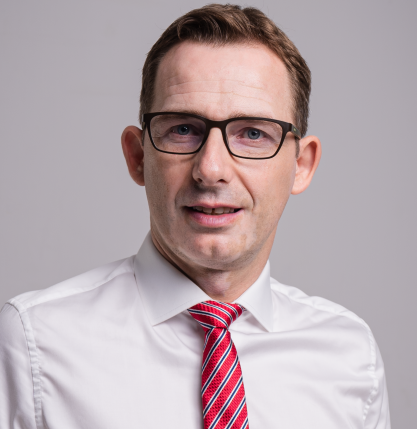
Carsten is a seasoned Project, OKR & Experience Management Consultant and the founder of Asia PMO. He lead successfully program and projects for Lazada, Citibank, Deloitte , Rolls-Royce, VW and Home Credit regarding business transformations, customer experience, operations roll-outs, sales and employee performance.
He is further an E-commerce Specialist with previous roles as VP CX/CS for Lazada and various client projects in FMCG & Fashion in South East Asia and was recognised as 2020 Global Customer Experience (CX) Thought Leader.
